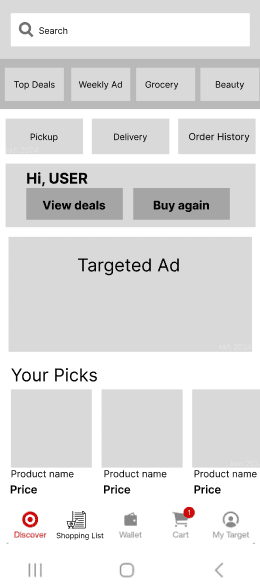
This project is a redesign of the Target mobile app based on results from an observational study.
Observation Process and Findings
My team and I conducted an observational study of 10 adults, 5 of which reported previous use of the Target mobile app and 5 who reported that they had never used the mobile app. The study required our participants to complete several tasks using the existing Target app, including searching for items, adding them to the cart or shopping list, editing a shopping list, and locating previous receipts and orders. We asked them to make comments during and after each task. We followed the Kansei method to identify common issues among all participants.
We found that 3 of the 5 participants who reported never using the app before had difficulties locating digital receipts and previous purchases. Additionally, 2 returning users and 3 non-users reported difficulties locating previously purchased items to "repurchase" them. Notably, all 5 returning users reported that they did not like that the ads on the homepage were not tailored to their previous purchasing habits and viewed the large banner ad as inconvenient. Finally, without prompting for location, we noticed that all 10 participants attempted to use the "Essentials" button on the navigation bar to make their shopping lists. The button actually leads users to their same-day delivery options and preferences, which our participants found misleading. The Kansei words we extracted from the comments were "inconvenient," "faster," and "easier."
Goals
Our goal for the redesign was to increase usability of the app and reduce the time it took for users to complete their tasks. Additionally, we wanted to improve the user experience and make it feel more tailored to the user instead of a generic shared experience.
Solution
While the current app design may increase time spent on the app, we noticed that more time spent did not necessarily mean better time spent. The time that potential returning customers would spend locating features could affect basket size and return rate; a frustrated customer in a hurry may not spend as much time looking for additional items or even consider the app a convenient shopping option.
With this in mind, we redesigned the app's home page to provide easier access to previous purchases and commonly repurchased items in order to increase customer return rates and improve overall usability. We changed the "Make a list" button to provide easier access to Order History, as the participants did not select this option when creating a shopping list. We also changed the "Essentials" button to a "Shopping List" button since that was the location that all ten participants initially selected to navigate to the shopping lists. Additionally, we reduced the size of the full page ad and marked it as space for a targeted ad. Targeted ads exist further down the page, and switching their position with the more generic seasonal ads may increase basket size as potential items of interest would appear in a more prominent location on the page. We also added two buttons to the greeting pane, since the users wanted a faster way to access the items they wished to repurchase.

Original Live Screenshot from Target Mobile App